Advancing supersonic turbomachinery for sustainable aviation and clean power generation
Gas turbines have been instrumental in advancing air transport by enhancing passenger comfort and reducing travel time between distant locations. However, the continuous growth of air travel has outpaced the expected yearly improvements in engine fuel efficiency, prompting the need for innovative propulsion systems. Detonation-based engines, which use hydrogen combustion via detonation, offer a promising leap in efficiency for compact thermal power systems.
Figure 1 illustrates a temperature-entropy diagram comparing two small pressure-ratio turbojets: one equipped with a rotating detonation combustor (RDE, black delta symbol) and the other with a conventional deflagration combustor (red gradient symbol). Although both engines share identical combustor inlet pressure and temperature conditions, the RDE exhibits a higher outlet pressure and reduced entropy generation, resulting in increased thrust for the turbojet (Sousa et al., 2017). The pressure gain combustion cycle of an RDE requires specialized components designed to handle the high outlet velocity. Recent experimental and numerical studies show that the unsteady flow downstream of the RDE operates in the low supersonic range, generating shock waves at the airfoil leading edges. This creates significant aerodynamic and heat transfer challenges, with aerodynamic losses primarily stemming from shock-wave interactions, supersonic flow detachment, and startability issues in the turbine.
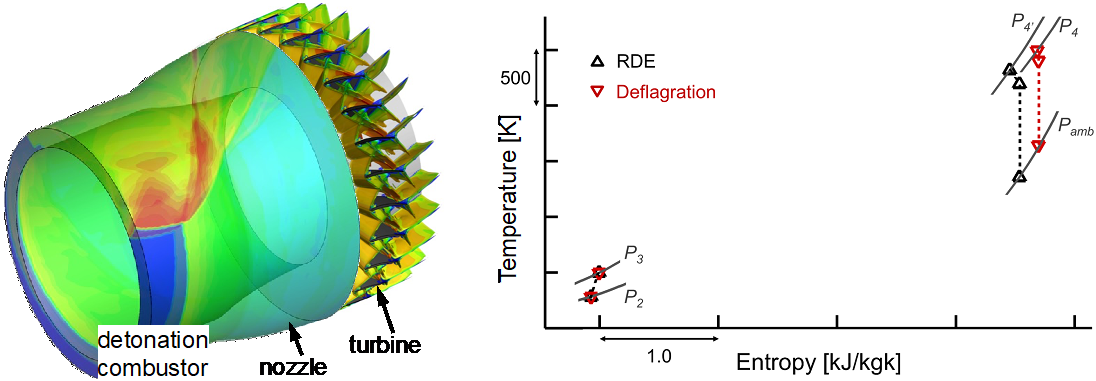
Figure 1. Temperature-enthropy diagram of an RDE
To ensure the successful start of supersonic passages, the turbine design must accommodate a normal shock wave that travels from the combustor to the turbine outlet during engine startup. The flow through the throat must not choke, which dictates the allowable contraction ratio from the inlet to the throat and limits the turning for a given inlet Mach number and turbine span height.
Using a reduced-order solver, the team can estimate shock and viscous losses, including profile and mixing losses caused by shear between the wakes and core flow. At turbine inlet Mach numbers above 2.0, the bow shock at the leading edge becomes the primary source of irreversibility. By employing this one-dimensional solver, researchers characterized the turbine's non-isentropic performance and evaluated different design parameters, such as leading-edge designs and chord-to-pitch ratios.

Figure 2. Supersonic turbine technologies: Axial bladed, axial bladeless, radial outflow
In addition to the development of bladed axial supersonic turbines, the team has also investigated alternative turbine designs to further enhance efficiency and adaptability in extreme flow conditions. These alternative concepts include smooth axial bladeless (Vinha et al., 2016) and wavy axial bladeless turbines (Braun et al., 2022), which reduce the complexity of traditional blade profiles while managing supersonic flows. Additionally, the group has explored radial outflow turbines (Inhestern et al., 2020), where the flow is directed radially outward, offering potential advantages in specific detonation engine configurations. Currently, the team is focusing on mixed flow turbines, which combine axial and radial flow components, aiming to optimize performance across a wider range of operating conditions. These innovative designs are part of ongoing research efforts to broaden the application of supersonic turbines for various propulsion and energy systems.
To handle the extreme thermal loads while maintaining high efficiency, turbine airfoils must also integrate advanced cooling technologies (Lozano et al., 2022). Computational fluid dynamics (CFD) simulations, coupled with experimental validation, have been critical for refining turbine designs. The experimental testing of these turbines is crucial to demonstrate progress toward making rotating detonation engines viable for power generation. A key part of this testing involves non-invasive diagnostic techniques, including high-speed schlieren imaging and laser-based velocimetry, to capture real-time flow behavior within the turbines. These methods have provided valuable insights into the performance of supersonic turbine stages under realistic conditions.
Looking to the future, the research conducted by Purdue's Experimental Turbine Aerothermal Lab on supersonic turbines is expected to play a significant role in emerging technologies for clean energy solutions. In addition to their work on hydrogen detonation engines, PETAL's team has extended their research to include the use of supersonic turbines in hydrogen production systems. A recent study (Ozalp et al., 2024) explored how supersonic turbines could enhance the efficiency of hydrogen production processes. The ongoing development of supersonic turbines for both RDEs and hydrogen production aligns with global efforts to reduce carbon emissions and transition to sustainable energy sources.
REFERENCES
Braun, J., Falempin, F., and Paniagua, G. (2022) Energy analysis of a detonation combustor with a bladeless turbine, a propulsion unit for subsonic to hypersonic flight, Energy Conversion and Management, 262: 115491. DOI: 10.1016/j.enconman.2022.115491
Inhestern, L.B., Braun, J., Paniagua, G., and Serrano, J.R. (2020) Design, optimization and analysis of supersonic radial turbines, Journal of Engineering for Gas Turbines and Power, 142(3): 031023. DOI: 10.1115/1.4044972
Lozano, F., Saavedra, J., and Paniagua, G. (2022) Aero-thermal numerical characterization of blunt fin-induced shock wave-boundary layer interaction and its control leading-edge cooling injection, Physics of Fluids, 34: 096110. DOI: 10.1063/5.0102243
Ozalp, N., Grasa, S., and Paniagua, G. (2024) Pyrolysis systems and methods of generating hydrogen gas from a hydrocarbon gas, US Patent US 2024/0140790 A1/
Sousa, J, Paniagua, G., and Collado Morata, E. (2017) Thermodynamic analysis of a gas turbine engine with a rotating detonation combustor, Applied Energy, 195: 247–256. DOI: 10.1016/j.apenergy.2017.03.045
Vinha, N., Paniagua, G., Sousa, J., and Saracoglu, B. (2016) Axial bladeless turbine suitable for high supersonic flows, Journal of Propulsion and Power. DOI: 10.2514/1.B35818
参考文献
- Braun, J., Falempin, F., and Paniagua, G. (2022) Energy analysis of a detonation combustor with a bladeless turbine, a propulsion unit for subsonic to hypersonic flight, Energy Conversion and Management, 262: 115491. DOI: 10.1016/j.enconman.2022.115491
- Inhestern, L.B., Braun, J., Paniagua, G., and Serrano, J.R. (2020) Design, optimization and analysis of supersonic radial turbines, Journal of Engineering for Gas Turbines and Power, 142(3): 031023. DOI: 10.1115/1.4044972
- Lozano, F., Saavedra, J., and Paniagua, G. (2022) Aero-thermal numerical characterization of blunt fin-induced shock wave-boundary layer interaction and its control leading-edge cooling injection, Physics of Fluids, 34: 096110. DOI: 10.1063/5.0102243
- Ozalp, N., Grasa, S., and Paniagua, G. (2024) Pyrolysis systems and methods of generating hydrogen gas from a hydrocarbon gas, US Patent US 2024/0140790 A1/
- Sousa, J, Paniagua, G., and Collado Morata, E. (2017) Thermodynamic analysis of a gas turbine engine with a rotating detonation combustor, Applied Energy, 195: 247–256. DOI: 10.1016/j.apenergy.2017.03.045
- Vinha, N., Paniagua, G., Sousa, J., and Saracoglu, B. (2016) Axial bladeless turbine suitable for high supersonic flows, Journal of Propulsion and Power. DOI: 10.2514/1.B35818