Waste-derived multi-component fuels
Waste is a major problem both locally and globally. Waste accumulation leads to environmental pollution, toxic effects on living organisms, and the difficulties of individual enterprises associated with the recovery of their waste. It is known that many wastes are a resource, but often the extraction of useful products from waste is a very complex and expensive process. One of the most promising ways is the use of waste, as well as low-grade fuels in energy. The corresponding technologies provide wide opportunities for the processing of various components (Fricler et al., 2023; Ni et al., 2022). However, there are still many unexplored characteristics and untested approaches to improve the efficiency of combustion, pyrolysis and gasification of various fuel mixtures.
Figure 1 shows frames of coal slurry combustion in a gas hydrate flame. Research shows that combinations of highly reactive and low reactive fuels provide significant improvements in process parameters at the ignition stages and stabilize combustion. Similar results are achieved with various mixtures of coal waste, biomass, and waste oils.
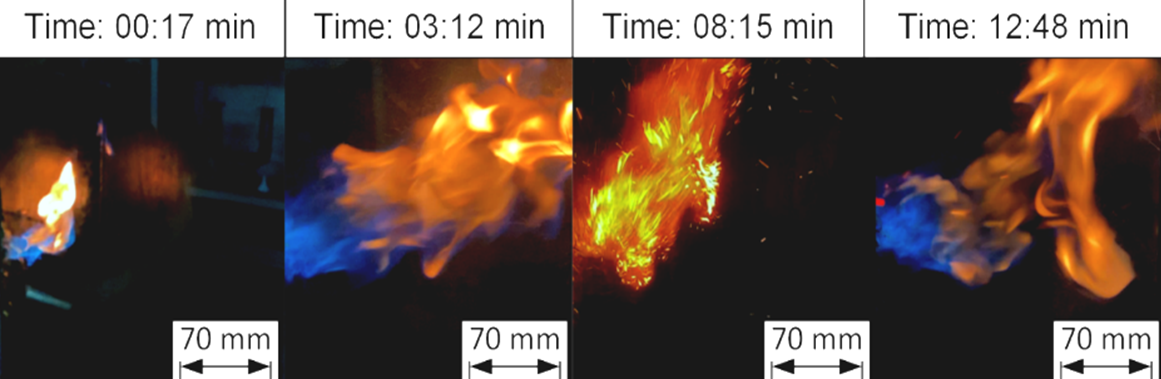
Figure 1. Combustion of pulverized coal slime in a hydrate gas flame
It has been experimentally proven that fuel slurries consisting of water (40–50%) and a combustible component can be successfully sprayed like liquid fuel (Fig. 2) (Kuznetsov et al., 2022). This expands the possibilities of using waste in energy. In addition, combinations of certain components and their concentrations provide micro-explosive ignition and combustion of fuel aerosol (Fig. 3). This accelerates fuel ignition several times and improves the quality of its combustion.

Figure 2. Atomization of a multicomponent fuel slurry
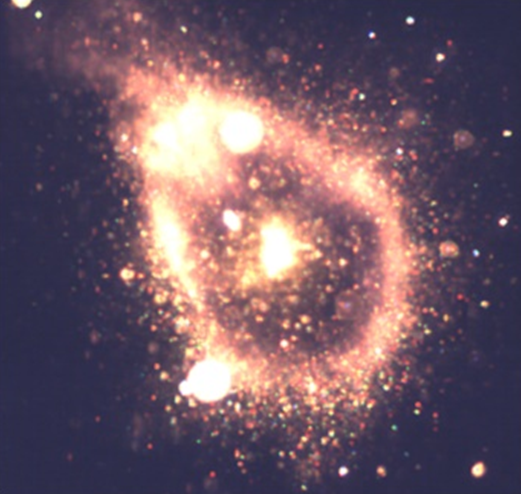
Figure 3. Micro-explosion combustion of a droplet of a multicomponent fuel slurry
The environmental performance i.e. the indicator that aggregates the relative amount of flue gas components of fuel slurries can exceed the similar parameter of coal fuel by 2–8 times (Vershinina et al., 2019). This occurs due to a set of factors, in particular, the reduction of temperature in the combustion zone, as well as the occurrence of chemical interaction of fuel components and water. This creates good prospects for the beneficial use of waste as an energy source and outlines ways to improve the environmental and economic indicators of the thermal conversion process.
REFERENCES
Fricler, V.Y., Nyashina, G.S., Vershinina, K.Y., Vinogrodskiy, K. V, Shvets, A.S., Strizhak, P.A. (2023) Microwave pyrolysis of agricultural waste: Influence of catalysts, absorbers, particle size and blending components, J. Anal. Appl. Pyrolysis, 171, 105962. DOI: 10.1016/j.jaap.2023.105962
Kuznetsov, G. V., Strizhak, P.A., Valiullin, T.R., Volkov, R.S. (2022) Atomization behavior of composite liquid fuels based on typical coal processing wastes, Fuel Process. Technol., 225. DOI: 10.1016/j.fuproc.2021.107037
Ni, Z., Bi, H., Jiang, C., Sun, H., Zhou, W., Qiu, Z., He, L., Lin, Q. (2022) Influence of biomass on coal slime combustion characteristics based on TG-FTIR, principal component analysis, and artificial neural network, Sci. Total Environ., 843, 156983. DOI: 10.1016/j.scitotenv.2022.156983
Vershinina, K.Y., Shlegel, N.E., Strizhak, P.A. (2019) Relative combustion efficiency of composite fuels based on of wood processing and oil production wastes, Energy, 169, 18–28. DOI: 10.1016/j.energy.2018.12.027
Verweise
- Fricler, V.Y., Nyashina, G.S., Vershinina, K.Y., Vinogrodskiy, K. V, Shvets, A.S., Strizhak, P.A. (2023) Microwave pyrolysis of agricultural waste: Influence of catalysts, absorbers, particle size and blending components, J. Anal. Appl. Pyrolysis, 171, 105962. DOI: 10.1016/j.jaap.2023.105962
- Kuznetsov, G. V., Strizhak, P.A., Valiullin, T.R., Volkov, R.S. (2022) Atomization behavior of composite liquid fuels based on typical coal processing wastes, Fuel Process. Technol., 225. DOI: 10.1016/j.fuproc.2021.107037
- Ni, Z., Bi, H., Jiang, C., Sun, H., Zhou, W., Qiu, Z., He, L., Lin, Q. (2022) Influence of biomass on coal slime combustion characteristics based on TG-FTIR, principal component analysis, and artificial neural network, Sci. Total Environ., 843, 156983. DOI: 10.1016/j.scitotenv.2022.156983
- Vershinina, K.Y., Shlegel, N.E., Strizhak, P.A. (2019) Relative combustion efficiency of composite fuels based on of wood processing and oil production wastes, Energy, 169, 18–28. DOI: 10.1016/j.energy.2018.12.027